The purple martin season in northwest Louisiana is rapidly coming to an end as the vast majority of martins have fledged their young. Our two martin colonies, mine and my neighbor Bob still have a few martin pairs but most have now finished nesting.
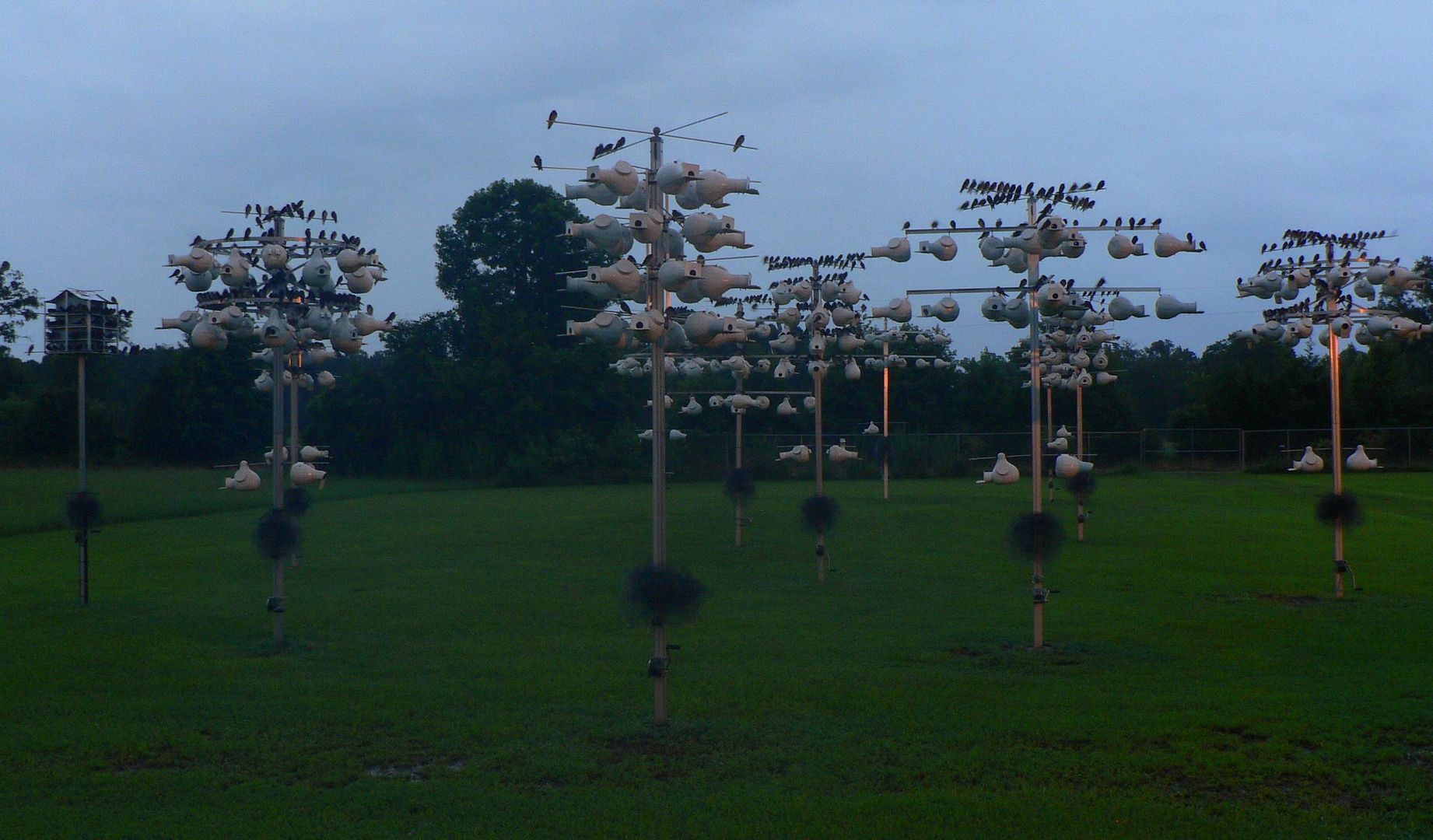
This season I erected 395 cavities including 367gourds and 28 Trendsetter compartments. There are Troyer Horizontals with tunnels/porches and with cling plates, Troyer Verticals, Excluders, and Super Gourds. I have 17 systems: 15 gourd racks including four Geminis, one 36 gourd Super System and three 24 gourd Super Systems, and seven K24s, five of which were downsized to 20 gourds each and two Trendsetter houses, 12 and 16 room systems.
Based on select nest checks and close observations of my colony, I believe every cavity was occupied by martins though not all have been successful. There are always some failures, particularly with large martin colonies. This was first time I have had a 100% or near that occupancy level by martins.
Several thousand martins have fledged this season from our two colonies and many of the survivors will disburse next year as SYs to other colonies in our area, including new ones.
This was the mildest season I have ever had for any kind of starling problems. I only shot maybe three or four starlings but did trap maybe a dozen beginning in November and continuing until the first of May. We don’t have a major starling problem out here and I have been able to easily control the situation through shooting/trapping. I have had my current colony since 2005 and not a single martin, egg or nestling has been harmed by any starling.
We almost never have house sparrows around our two martin colonies. But this year I did trap two male sparrows early before the martins arrived and shot several more. Sparrows would have almost no chance of securing any territory with our large colonies once the martins return in force.
All our systems are protected with net traps made from bird netting from the number one terrestrial predator of martins in our area and probably the Deep South, the rat snake. We have HUGE rat snakes in our area but the net traps have stopped every one of them from killing our martins. The three species of belly crawlers we have are the black rat snake, Western rat snake and Texas rat snake. We have caught all three in our traps and the black rat snake has been the largest. So far this season I have only caught one medium size Texas rat snake in a net trap back in April. We prefer using net traps because we can catch the snakes and remove them unharmed from our yards to prevent them from preying on other beneficial songbirds like Northern mockingbirds, Northern cardinals, brown thrashers, lark sparrows and orchard orioles. Rat snakes frequently raid songbird nests and don’t just eat rats and mice. I have dealt with rat snakes for over 50 years and have NEVER seen one eat a rat/mouse, but have seen them eat many beneficial songbirds and their eggs/nestlings. I seriously believe they should be renamed, Songbird and Rat Snake!
We also had the fewest migrant Accipiter hawk and merlin (small falcons) attacks on our martin colonies that I have ever observed during the months of February, March, primarily April and early May. We usually have many more attacks by migrating Cooper’s and sharp-shinned hawks and merlins. I kept records on the number of attacks by species. There were four Cooper’s hawk, five sharp-shinned hawk, and 13 merlin attacks for a total of 22 observed and recorded migrant raptors from February until May 13, 2020. This is the fewest number of attacks I have ever seen during that time frame since starting my current martin colony in 2005. We have had many more than this in the past and some years I have observed as many six in a single day by all three species listed above. Most of the attacks were on my many plastic martin decoys attached to poles and scattered around the perimeters of both our martin colonies. These decoys saved the lives of real martins a number of times.
Unfortunately, there have been at least two pairs of resident Cooper’s hawks, one from the east and the other from the west, which have preyed on the martin fledglings during June and now in July. I have observed a number of successful martin fledgling kills by both male and female Cooper’s hawks and all these have been “at a distance”. The hawks nearly always attack the martin fledglings when they are at family assembly sites on power lines or in tree tops several hundred yards from our colonies. We probably lose over 100 martin fledglings each season to resident Cooper’s hawks.
We have had at least one great horned owl that has made some attacks on the martin fledglings as they roost outside on the gourd racks and house porches. But the attacks have been sporadic which is unusual so far. Usually once a great horned or barred owl is successful in catching martins at a colony, the owl comes back for more each night.
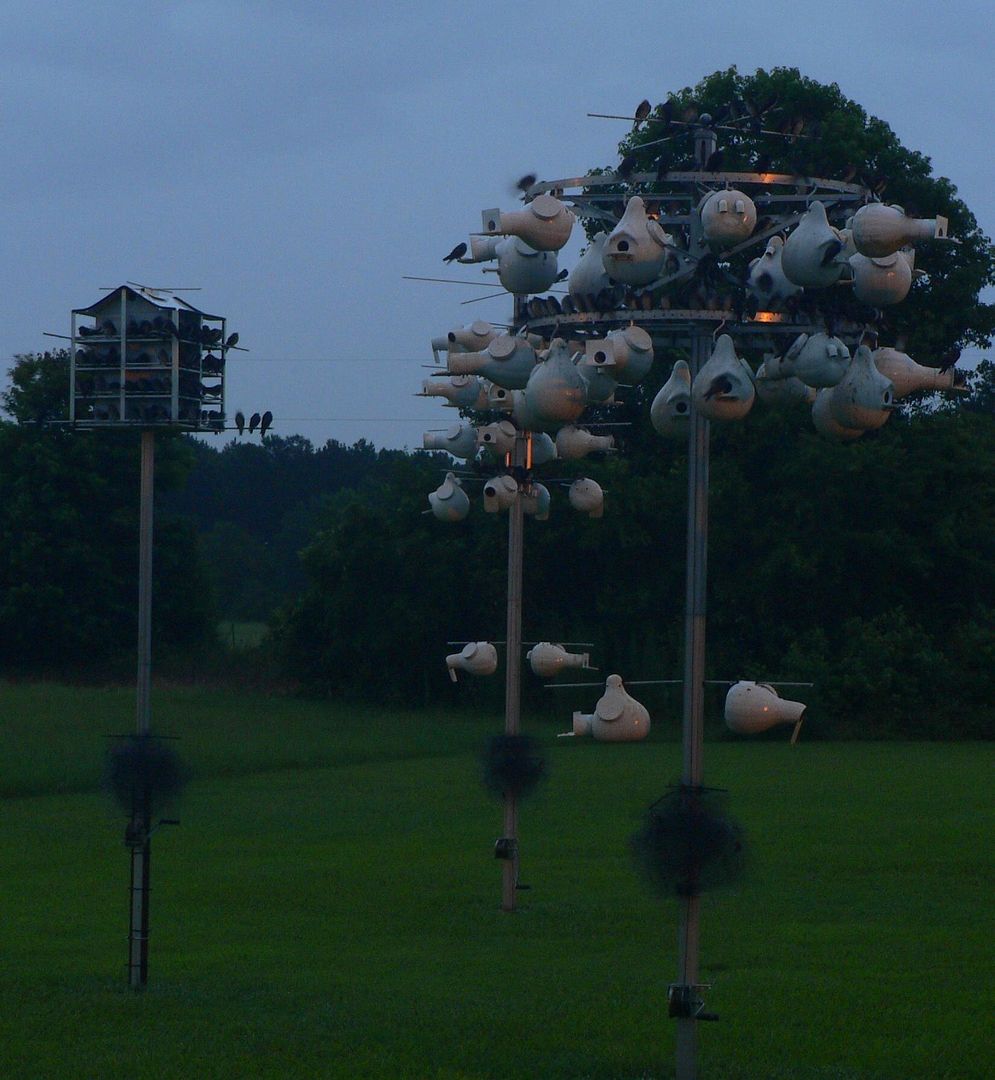
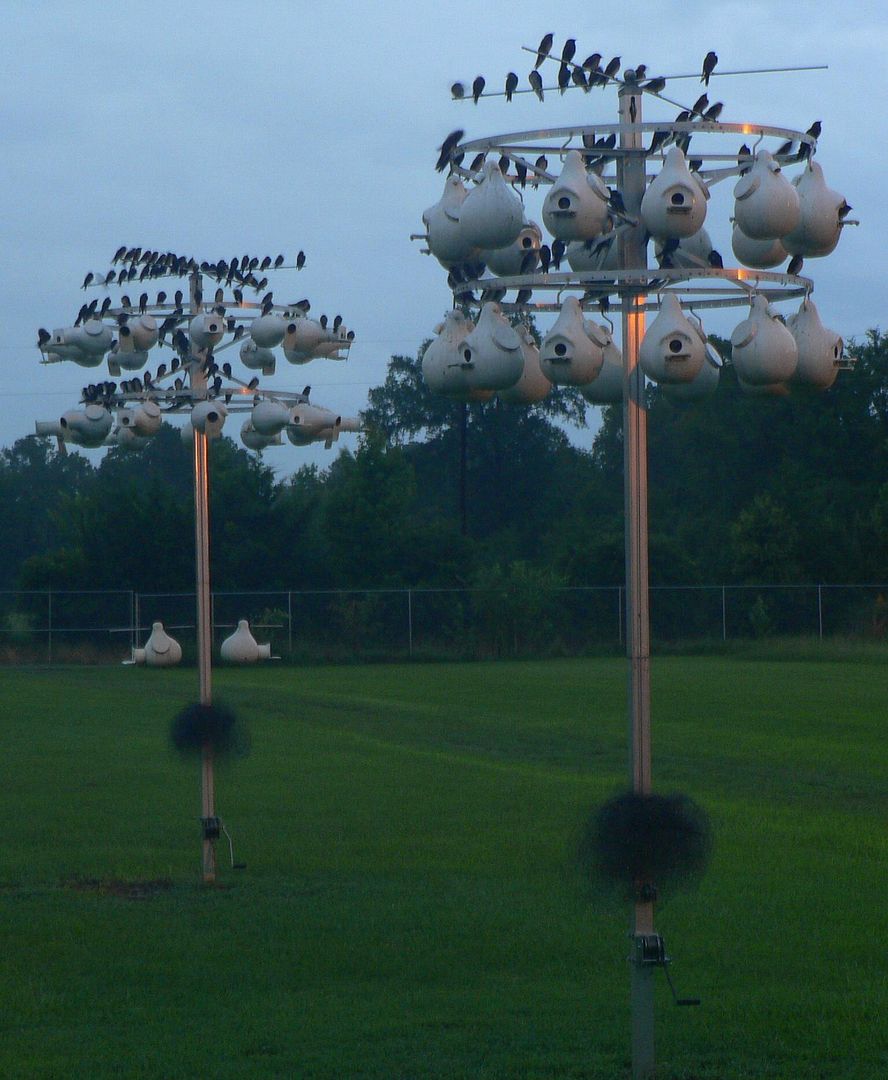
Several thousand martin fledglings, many of which probably were raised in our two colonies, have been coming in to roost in the evenings. Many of our gourd racks/houses will be covered with these youngsters. I really don’t like this behavior because it attracts great horned and possibly barred owls. I did initially chase the martin fledglings off the gourd racks/houses but finally let them roost. Of course, the great horned owl has only made occasional attacks but that can change any night. The fledglings have roosted in peace for the last several nights.
SY male infanticide behavior has occurred this season and fortunately only a small number of martin nestlings were killed this season that I could determine. A small number of ASY pairs are now re-nesting after their nestlings were thrown out by single SY males. My use of 15 of what I call Single SY Male Martin Deflector Gourds erected in early May low down on several of the gourd racks did attract some of the most troublesome SY males away from active nests in the racks. All 15 were occupied by SY pairs. The single SY male looking for territory and a mate is the number one killer of small martin nestlings in our colonies. Not a single martin, egg or nestling has been harmed by any starling or house sparrow!
Here are some photos of my martin colony I took of martin fledglings “getting up” after an owl free night! The martin fledglings really like to cluster inside the Gemini gourd racks with all the support braces. They also cover the porches of my 16 room Trendsetter.