
Though it is cold and rat snakes in most places are in hibernation, snakes will awaken when it gets warmer and start looking for prey. And nothing is more inviting to a hungry rat snake than a gourd rack or house full of purple martins. It is a feast!
All martin landlords should install some kind of snake guard on their martin housing poles to keep the “belly crawlers” at bay. Rat snakes live in nearly every location that martins nest though most snakes are more common in the warmer southern states. My yard in north Florida where I previously lived was INFESTED with gray and red (corn) rat snakes. I have not seen as many rat snakes at my current location in northwest Louisiana.
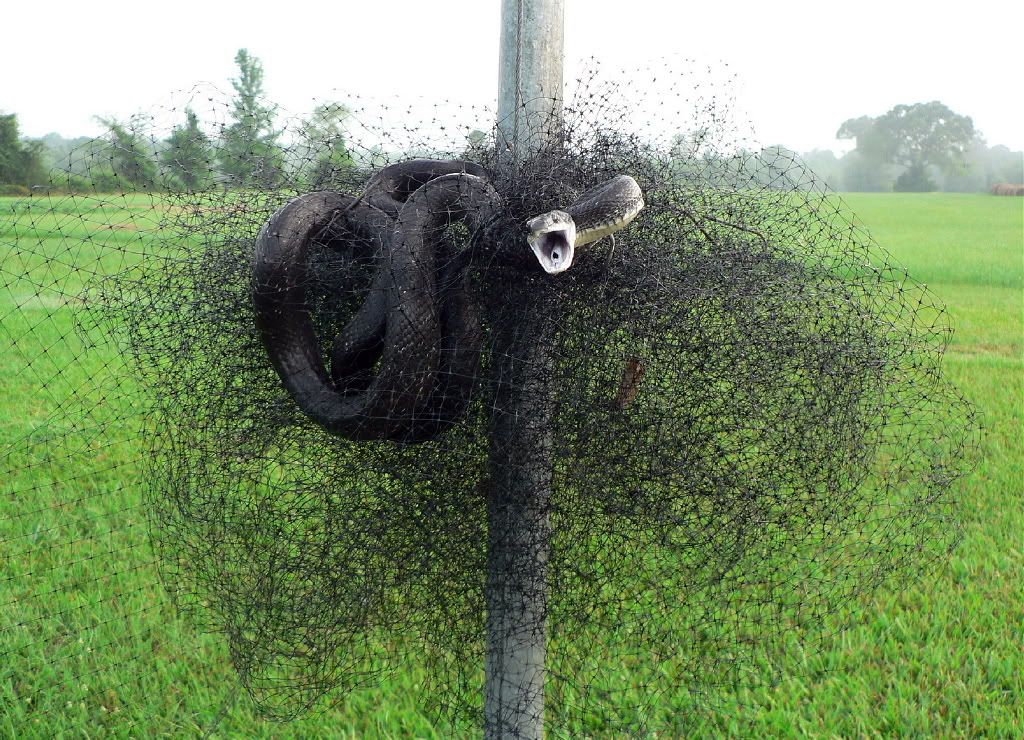
Bob, my neighbor, and I use net traps made from bird netting to catch rat snakes that may try to climb our martin housing poles. We have had great success in thwarting huge black and Texas rat snakes with net traps. Some of these snakes would have inflicted enormous damage to our martins if the snakes had managed to reach the houses or gourds.
Here are some photos of rat snakes that have been caught in net traps at Bob’s martin colony and mine:
This is a close up photo of a large black rat snake caught in ¾ inch square bird netting. The snake was thick and only got about six inches of its head and neck area through the netting. The snake was hopelessly caught and could not go forward or back out because the netting was tight around its body. The netting acts somewhat like a “gill net” and catches the snake’s scales. A rat snake will weave through the open mesh of the netting like it is some kind of vegetation until the snake can get no farther inside and becomes ensnared.

This photo shows the previously mentioned rat snake pulled out from the net trap. The snake’s head and neck area is trapped in the netting.
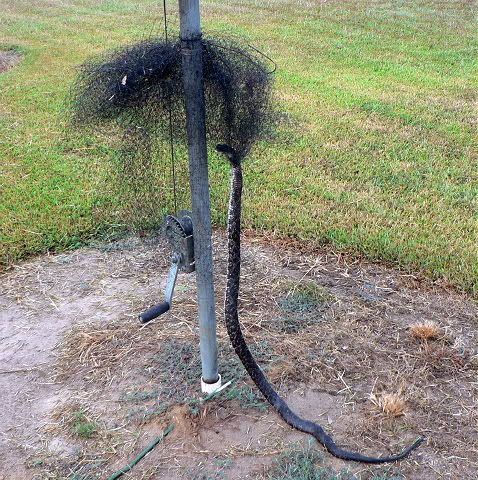
Here’s another photo of a different and huge black snake striking out after being caught in a net trap. Rat snakes can become very irritated when trapped and they will bite and draw blood from your hands if the snake can sink its curved back teeth in to your skin. I have been bitten a few times by rat snakes when I remove them from the netting. However, many snakes are not as aggressive once they have been caught in a net trap for a long time. They just want to get away! We don’t kill rat snakes after removing them from the net traps and release them several miles away from our martin colonies.
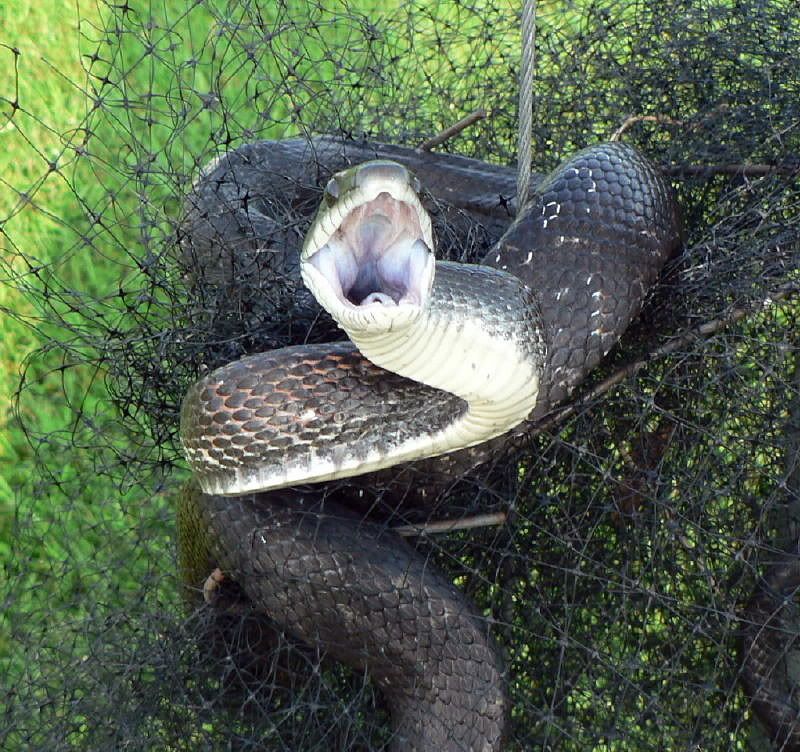
Another photo of this rat snake coiled up in the net trap and the snake is opening its mouth in defiance!
This photo shows the rat snake being pulled out by Bob from the net trap. This was a large rat snake.

This photo shows Bob holding the snake by the head after we removed the snake from the net trap. Bob’s “attack dog”, Dixie is on guard.

 and a PMCA member!